How to Build a Home Gym on a Budget: What to Buy First
A practical order of purchase for a budget home gym: space and flooring first, then the core pieces (dumbbells, bench, rack or cardio), with tips to avoid wasting money.
 By Deals & Guides Desk
Updated October 4, 2026
This guide is based on manufacturer specifications, published information and buyer feedback. We do not claim hands-on testing and we do not give medical or personal training advice. Always follow the instructions that come with your own equipment.
A home gym does not have to be expensive, but it is easy to overspend on gear that ends up unused. The cheapest setup is the one built in stages around what you actually do. This guide gives a sensible order of purchase and the mistakes to avoid.
Step 1: Decide what you will do
Write down your main goal. Strength training, cardio, staying active during the workday and general fitness each call for different equipment. Our equipment finder can point you to the right guide.
Step 2: Measure your space
Measure width, length and ceiling height of the spot you will use. Ceiling height decides whether a full rack, overhead presses or a treadmill with an incline will fit. Use the space checker and read how much space a power rack needs.
Step 3: Protect the floor
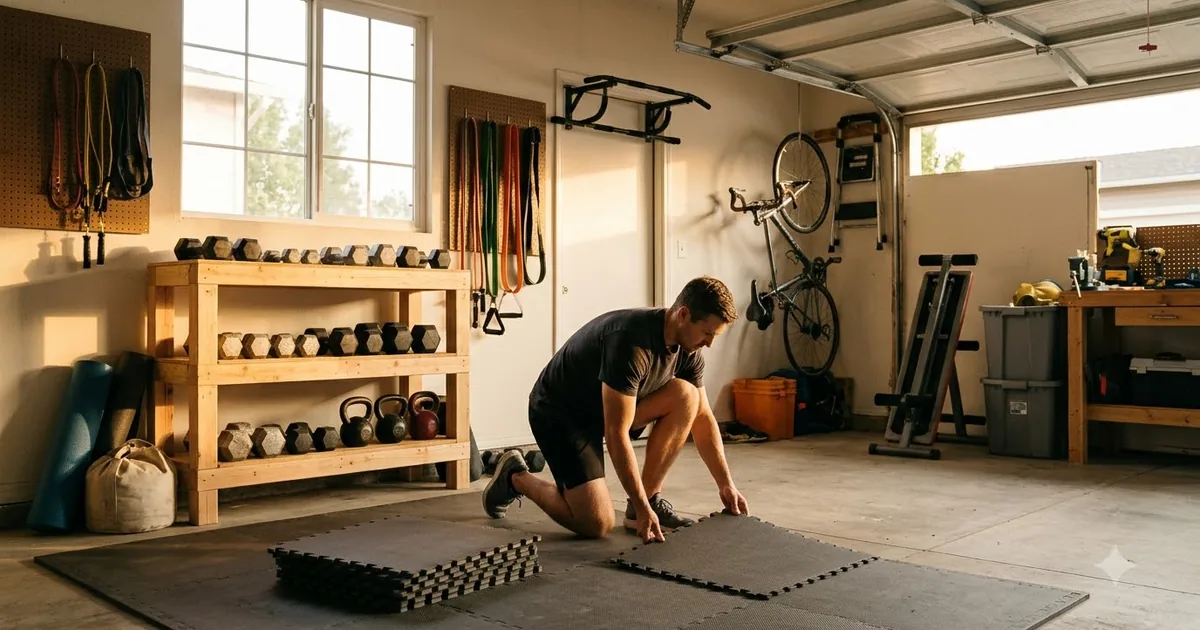
Heavy equipment can damage floors and transmit noise. Rubber mats are a common choice; see our flooring guide.
Step 4: Buy the core first
| Goal | Good first purchases |
|---|---|
| Strength, small space | Adjustable dumbbells and an adjustable bench |
| Strength, garage or spare room | A power rack or half rack, barbell, plates and a bench |
| Cardio | A treadmill, rower or bike |
| Work from home | A walking pad |
Step 5: Add accessories later
Resistance bands, a pull-up bar, a mat and storage are inexpensive additions once your core equipment is in place.
Money-saving tips
- Buy during sale events. See our deal guide.
- Check used listings for plates, barbells and benches, and inspect them carefully for rust and wear.
- Compare the per-weight cost of fixed dumbbells against adjustable sets for the weights you need.
- Do not buy a machine you do not have room to leave set up; equipment you have to assemble every time is used less.
Common mistakes
- Buying a rack before checking ceiling height
- Ignoring weight limits and what the equipment is designed for
- Skipping flooring and then worrying about damage
- Choosing very cheap equipment with little published information on weight capacity
Three budget paths
- Dumbbells-first path. Adjustable dumbbells, an adjustable bench and a mat cover many exercises for chest, back, legs, shoulders and arms. This suits apartments and spare rooms.
- Barbell path. A rack, barbell, plates and a bench suit people who want to progress heavier over time and have the space. A half rack keeps the cost and footprint down.
- Cardio path. One machine you will really use, such as a folding treadmill, rower or bike, plus an equipment mat.
Where to compromise and where not to
Save money on accessories and finishes. Do not compromise on stability, stated weight capacity and safety features such as safety arms on a rack. A wobbly bench or an under-rated rack is not a bargain.
Plan for upgrades
Choose equipment that lets you grow: a rack that accepts attachments, a bench that supports heavier users and dumbbells that go beyond your current weights. Reading the compatibility notes on a product page can save you from buying twice.
Frequently asked questions
How much does a home gym cost?
It depends on what you buy. See how much a home gym costs.
What is the best first piece of equipment?
For many people it is a set of adjustable dumbbells and a bench, because they work for many exercises in a small space.
Can I build a home gym in an apartment?
Yes. See how to set up a home gym in an apartment.
Popular buying guides
About the author
The Deals & Guides Desk covers sale events, budget builds, space planning and safety checks, citing manufacturer instructions and official sources such as the CPSC.